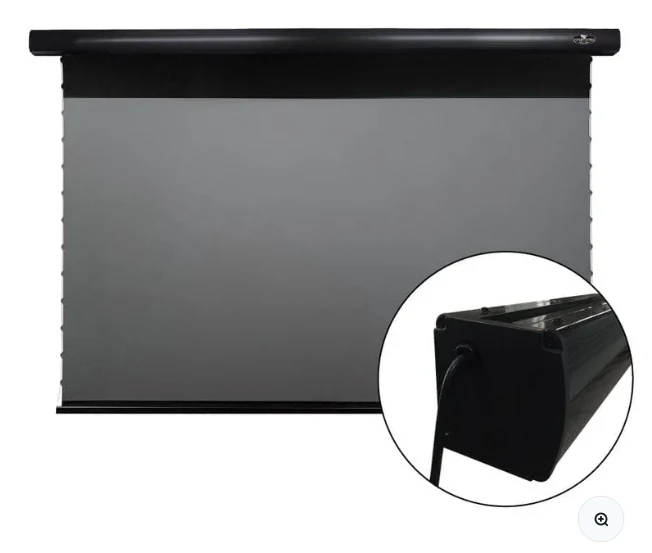
Overhead light is the easiest target
Many UST CLR materials are designed specifically to reject light arriving from above while accepting steep projection light from below. That is why they can preserve contrast under ceiling lights better than a white wall or matte-white screen.
Direct sunlight is a different problem
Sunlight through a window can be orders of magnitude brighter than controlled indoor lighting. No front-projection screen makes direct sun disappear. Blinds, curtains and screen placement remain valuable even with a premium ALR material.
Room surfaces still affect contrast
White ceilings and walls reflect projector light back toward the screen. ALR can reduce some of that wash, but darker surrounding surfaces and controlled lighting improve every front-projection system. Think of ALR as part of room design, not a substitute for it.
Size and brightness interact
A bright projector on a 100-inch screen will usually have more luminance than the same projector on 120 inches. If daytime use is a priority, do not choose the largest diagonal only because it fits. Balance immersion with available light output.
Check the live VIVIDSTORM PRO listing
Confirm current size options, stock, regional pricing and included controls before planning the final mount.
See current VIVIDSTORM PRO offer ↗