Start with projector geometry
A long-throw projector sends light from the back of the room. A UST projector sends light upward from a point close to the wall. Screen materials are engineered around those arrival angles. A material marketed simply as “ALR” can be excellent for long throw yet reject or distort light from a UST projector.
What CLR usually signals
CLR often refers to optical structures designed to reject light coming from the ceiling while accepting steep-angle light from a tabletop UST below. Lenticular materials are a common implementation. The exact rejection direction and gain vary by product, so compatibility statements are more useful than the acronym alone.
Lenticular and Fresnel are not the same
Lenticular UST screens typically use a repeated sawtooth-like structure to reflect light from below toward viewers and absorb light from above. Fresnel UST screens use concentric optical structures that can reject light from more directions and often offer higher gain, but usually with a narrower viewing cone. Neither design is universally superior.
A simple buying checklist
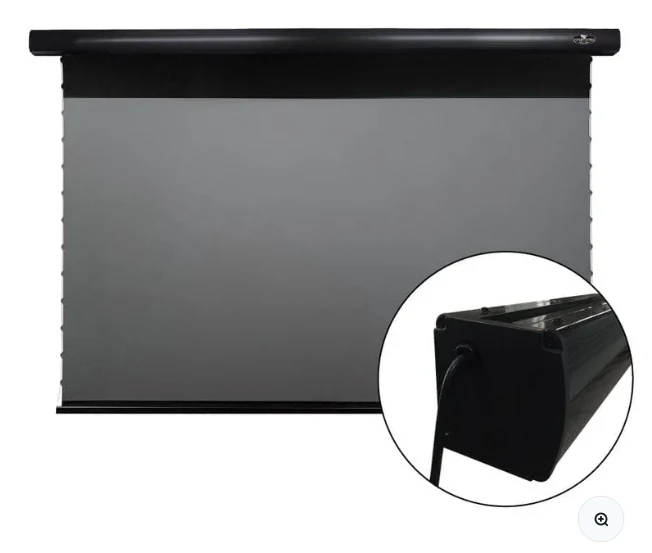
Confirm: UST compatibility, whether the projector is below or above the screen, screen gain, viewing angle, ambient-light direction, screen size and form factor. After that, compare motorized versus fixed construction. That sequence prevents the most expensive mistake: buying a premium screen with the wrong optical geometry.
Check the live VIVIDSTORM PRO listing
Confirm current size options, stock, regional pricing and included controls before planning the final mount.
See current VIVIDSTORM PRO offer ↗