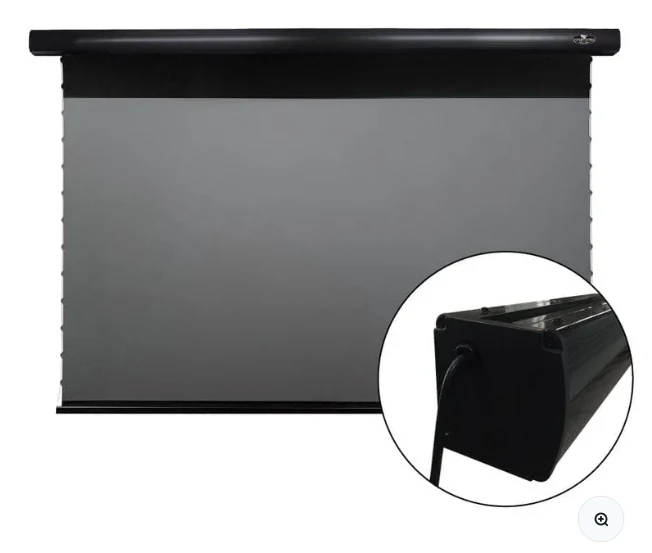
What 0.6 gain means
A 0.6-gain screen reflects less light on-axis than a 1.0 reference surface under a simplified comparison. In a directional UST material, that lower number can accompany stronger control of stray light and darker perceived blacks in a lit room. The result depends on the complete optical structure.
Higher gain is not automatically better
Higher gain can preserve brightness, which is attractive for large images or modest projector output. But concentrated reflection may narrow the ideal viewing cone or increase sensitivity to alignment. Fresnel UST screens often sit at higher gain with narrower viewing angles than wide-view lenticular materials.
Match gain to projector and room
If your projector is bright and the room has overhead ambient light, a low-gain CLR material can be a rational choice. If the image is very large, projector output is limited and seating is centered, a higher-gain screen may be useful. Evaluate gain with size, ambient light and viewing angle rather than alone.
Use published gain as a starting point
Manufacturer gain numbers can be measured under different conditions. They are valuable for narrowing choices within a product line, but independent standardized measurements are more useful when comparing unrelated brands. Avoid treating tenths of a gain point as decisive without context.
Check the live VIVIDSTORM PRO listing
Confirm current size options, stock, regional pricing and included controls before planning the final mount.
See current VIVIDSTORM PRO offer ↗